Peak Pickleball Challenge Courts
Competitive play, done the right way.
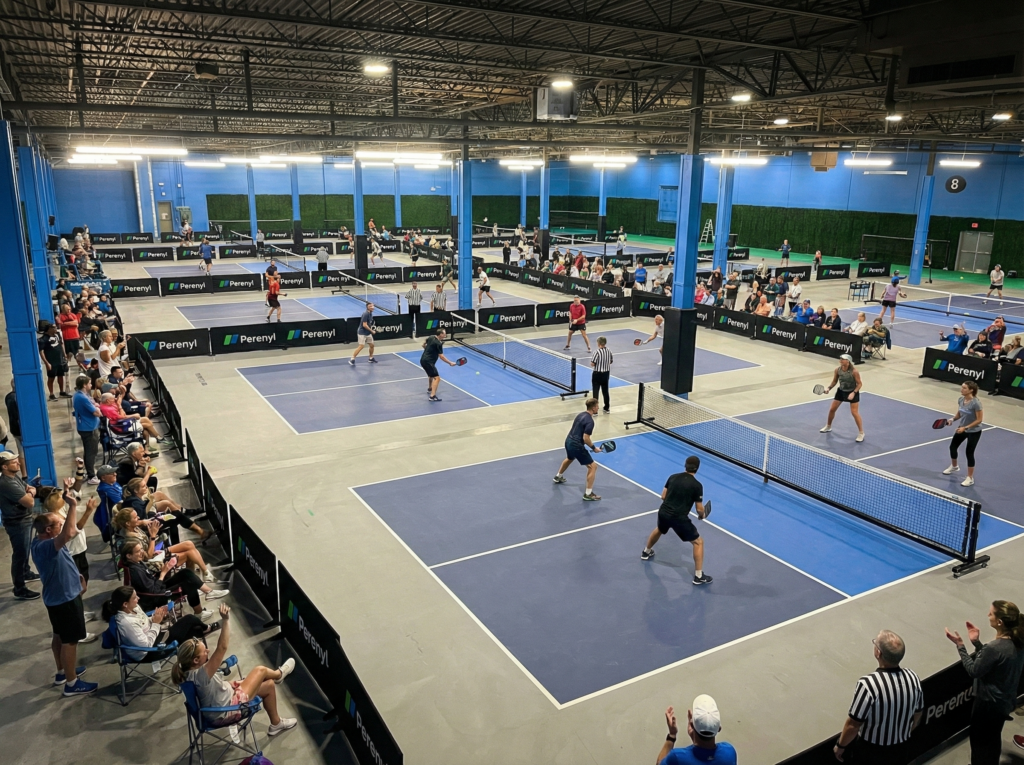
Challenge Courts at Peak Pickleball add an exciting, competitive option to Open Play. They give players a chance to test their skills, move up through the courts, and enjoy higher-level games in a fun, well-organized format.
How the Challenge Courts Work
The Challenge Courts are designed for players who enjoy competitive, fast-paced pickleball with a clear path to move up. During designated “Open Play with Challenge Courts” sessions, two courts are reserved for this format:
Court 1
Upper Challenge Court
The Upper Challenge Court is designed for higher-level competitive play.
You may play on this court if one of the following applies for eligibility:
- You have a Peak Rating or DUPR of 4.25 or higher, or
- You earn your way up by winning three consecutive games on the Lower Challenge Court
This court is reserved for advanced competition and consistent, high-level play.
Court 2
Lower Challenge Court
The Lower Challenge Court is open to all players and serves as the entry point to challenge play.
You may play on this court if you are looking to compete, regardless of rating.
- Any player may participate without restrictions
- If partners win three consecutive games, you earn the right to move up to the Upper Challenge Court
This court is ideal for building momentum and working your way up.
These courts operate alongside Open Play and offer a structured way to compete, move up, and test your game at higher levels of play.
If a team on the Upper Challenge Court loses three games in a row, they must move down to the Lower Challenge Court, where they may work their way back up again.
Challenge Court Game Rules
- All games are doubles
- Games are played to 11 points, win by 2
- Teams switch ends at 6
Paddle Rotation
- After each game, the next two paddles in the Challenge Court rack enter as the challengers
- If a team stays for three games, the next four paddles take the court
- Exiting players may place their paddles back in the rack and rejoin the rotation
This keeps play moving, gives everyone a fair chance to get on the court, and ensures competitive matchups throughout the session.